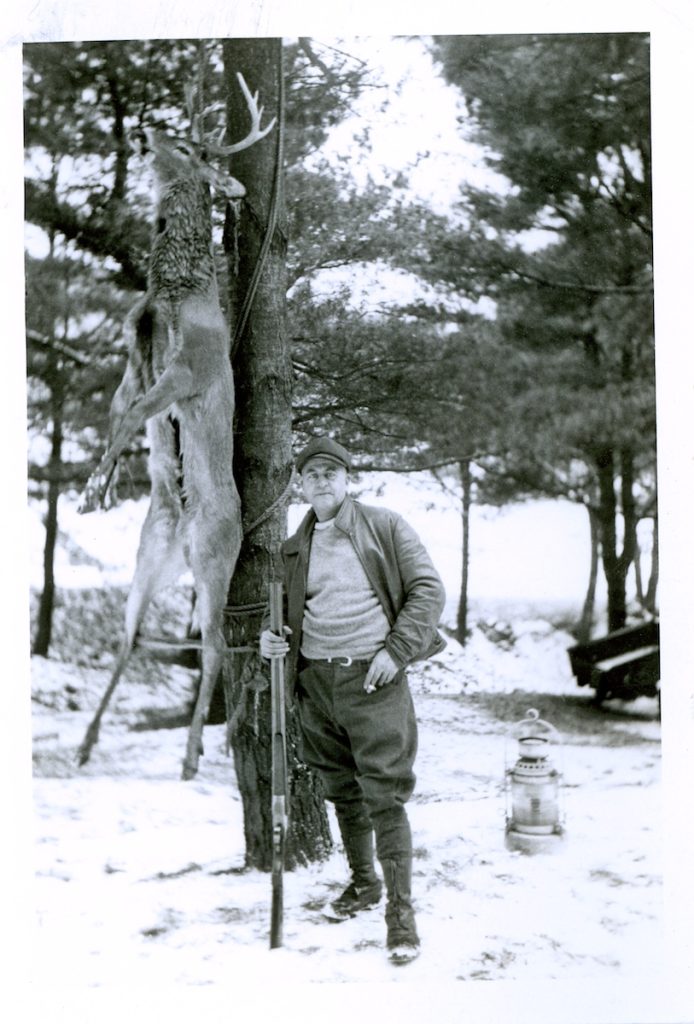
(Photo: Grandpa in the Bristol Hills of Upstate NY)
My mom told me recently that when she went to the hospital after her dad died, they handed her a bag of his belongings. And she remembers thinking, “How very sad. This is all that’s left of one man’s life.”
But there was more…so much more!
Memories of a Man
Starting in the 1930’s, Walt took weekends and summer vacations to clear land for a homesite on 18 acres in Upstate NY. He mixed and poured concrete, framed, and roofed what eventually became a 3000 square foot “cabin” on a gravel road near Honeoye N.Y.
Three generations of family and friends gathered there for decades — campfires, clam bakes, hunting parties, “snipe hunts”, picnics and sing-a-longs. He built a place that created memories for hundreds of people and served as the basis for my Mom’s memoir, The Camp Book.
He left a great deal more than what was in that small plastic bag.
The memories he built come to mind with every waft of woodsmoke and smell of fragrant pine needles, the crunch of gravel on the road down below and the rich look of yellowed knotty pine wood. I’ll always remember the sound of dice rattling around in that leather cup, then clattering across the shellacked wooden bar, shouts of surprise from adults playing their games.
Walt never would have imagined how the legacy he built rippled through the ages.
What Makes a Legacy?
The word “legacy” sounds so presumptuous, doesn’t it? It’s a term that brings to mind people with means who have statues built in their honor or plaques affixed to a wall somewhere.
Most people I know don’t talk about leaving a legacy, but they accomplish it just the same.
They do it through the lives they lead — through the simple act of building families, friendships, businesses, homesteads and farms.
They write journals to chronicle their daily lives, significant events, and unspoken sentiments family members discover years in the future.
They donate to have their names engraved on bricks to grace pathways at the top of Pikes Peak, church yards and memorial gardens. They invest in scholarships and bequeath savings to churches and worthy organizations. They write letters to children to be opened after they’re gone.
They create — paintings, poems, patches, photos, books, music, ceramics, sculptures, jewelry, leather relics and wooden furniture that’s passed down through generations.
And they tell stories — tales of camping trips, hunting treks, skiing and boating adventures, the cruise they took, the mountains they climbed, animals they raised, the service they gave to our country. All stories that live on in countless memories.
The Hidden Truth About Leaving a Legacy
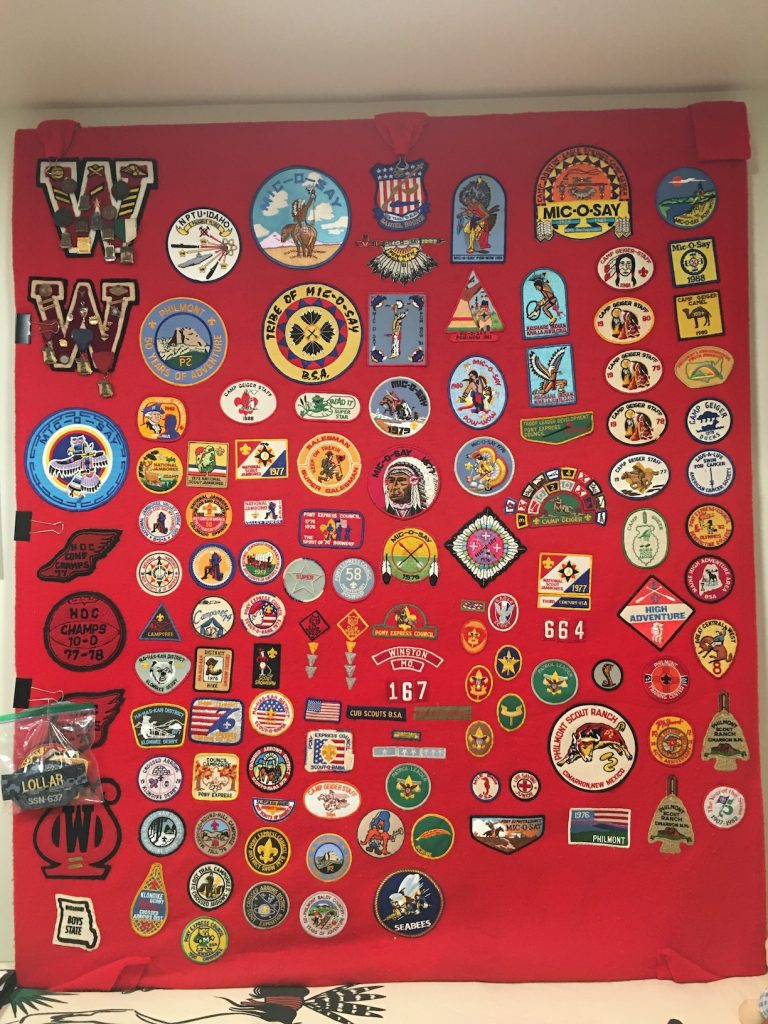
My husband has a large felt banner his mom made for him where she sewed his patches from his high school, the Boy Scouts and scouting camp. Later, he added patches from his years in the Navy serving with different units and on submarines. It’s a snapshot of another man’s life.
I’m in the midst of writing books about my parents and grandparents — for family — so the history will be preserved. Maybe that’s why this topic for this article came to mind. More likely it’s because we recently lost someone close to us.
The truth is, leaving a legacy doesn’t have to be anything grandiose.
It could be a cardboard box with mementos you gift to your children or favorite nephew. Perhaps it’s a collection of tools, treasured books, records, sea shells, journals or Christmas ornaments.
(I’m not so sure your old bowling trophies would qualify though.)
Give it some thought. The holidays are a good time to reflect.
Leave the legacy while you have some control, some choice.
So there are more to memories than just a plastic bag.
Quotes
“What have you done with the life I have given you?” —Jesus, from the book Imagine Heaven by John Burke and Don Piper
“They say a person needs just three things to be truly happy in this world: someone to love, something to do, and something to hope for.” ―Tom Bodett
“Why do you go away? So that you can come back. So that you can see the place you came from with new eyes and extra colors. And the people there see you differently, too. Coming back to where you started is not the same as never leaving.” —Terry Pratchett, author