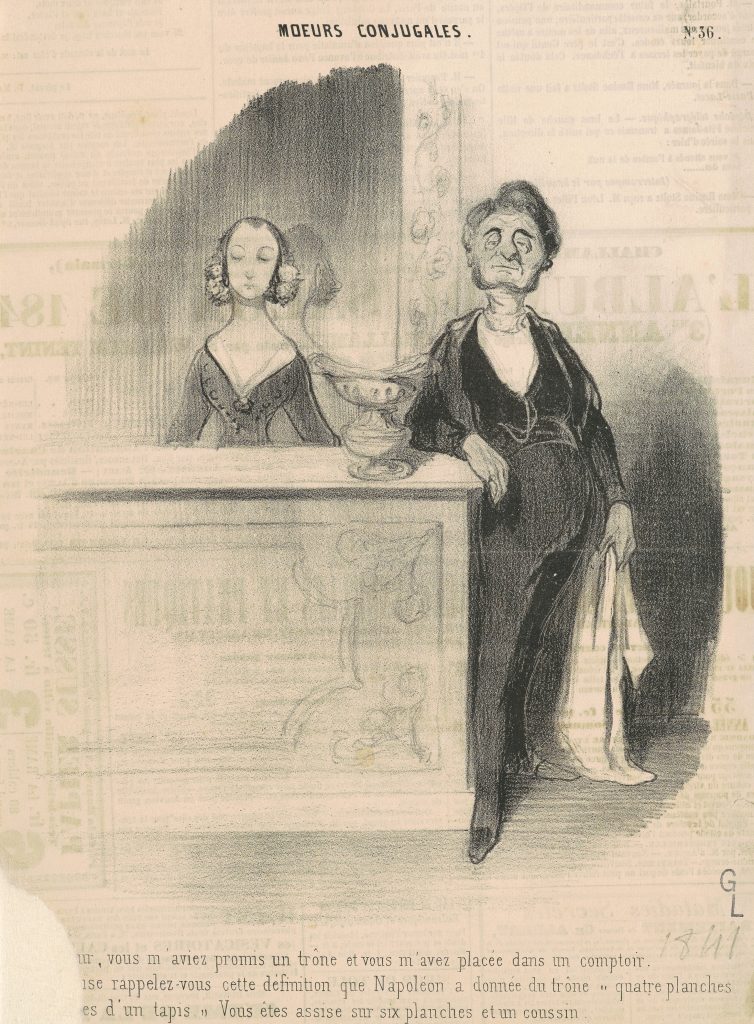
Artist: Honoré Daumier, 1841, National Gallery of Art
Years ago, the kids and I moved from an apartment into a townhouse. We were fortunate to have a gang of 10-12 people helping us and of course, as the day wore on they all needed to be fed.
So about noon I headed to the local Subway sandwich shop and lined up like everyone else to place my order.
Clearly A Customer Imposition
When it was my turn, I asked, “Can I please have six footlong sandwiches?” Knowing this was a big order, I tried to make it as easy as possible for the lady behind the counter.
But I saw her expression change from neutral to one of dismay, so I quickly continued, “We can make this easy. Let’s do half the sandwiches on white and half on wheat.”
She glanced at the line behind me, shot me a dirty look, then slapped a loaf of bread down on the counter and asked, “What kind of sandwiches do you want?” (She stressed the word want.)
Again, trying to make it easier on her I said, “Let’s make half of them Italian on wheat and the other three turkey on white.”
You’d think I asked her to mix and roll the bread dough herself. She continued to slap each loaf down on the counter, wielding her knife like she was gutting a fish and scowling as she asked about the cheese and veggies.
It wasn’t like she was working there alone. She had helpers. But it was clear she was put out at having to prepare so many sandwiches for just one customer.
A Customer Takes a Stand
Finally, after five minutes or so of this treatment, I looked her straight in the eye and calmly asked, “Would you like me to take my business elsewhere?”
Her demeanor changed in a snap from disgusted to sober and she quietly said, “No.” From then on it was like a whole different person had taken her place.
I learned a few things from that experience. After that I would call ahead and give them advance notice to fulfill a big order. But I also decided I would speak up sooner if I ever received that kind of treatment from an employee whose job it was to serve their customer.
6 Super Service Skills
After years of taking inbound customer calls, then being a Sales and Service Team Manager in a 400 person call center, I know what it’s like to be on the receiving end of of unhappy people.
People get stressed, agitated and frustrated. We all have our moments.
But whether we’re the customer or not, there are ways to handle testy situations. Here are a few:
- Low down and slow down. Drop your voice an octave lower and slow your speech. This will calm not only you but the other person too.
- Put your face in neutral. To clear your face of emotion, relax your tongue in your mouth. Go ahead, try it right now. (Don’t let it hang out and try not to drool.) Do you feel your facial muscles relaxing?
- Say, “I understand.” Then follow it with a neutral word like, “I understand you must be frustrated, concerned, worried, disappointed.”
- Give thanks. Say, “Thank you for your patience.” Even if they’re anything but patient, it will give them something positive to aspire to and encourage them to change their demeanor. It will also remind you to remain patient as you try to help them or explain your next steps.
- Say what you will do to address the issue. Or, if you’re the customer, be clear about what steps you want them to take on your behalf. Either way, focus on the outcome.
- Listen. Sometimes people just need to vent. It doesn’t mean they’re angry with you necessarily. They’re frustrated with the situation.
5 Ways to Strengthen Relationships
Those strategies listed above can also come in handy with your spouse, partner, teenagers or workplace relationships. Here are a few more simple ways to create a happier home or job site.
- Say please and thank you. Common courtesy inspires people to treat each other with respect.
- Assume they have the best of intentions. Most people aren’t out to do harm to one another.
- Adapt your approach to their personal style. Get the best from people by learning what motivates them. Read the book, “Five Love Languages,” take a personality styles assessment or take one together. And you might try asking the other person, “What makes you feel appreciated? What frustrates you? What inspires you?”
- Forgive, forgive, forgive. Of course, whether at work or at home, some behaviors should not continue, so in that case, use the communication model below.
- Provide constructive feedback. Don’t land on them with both feet. Use the “4-F” Model to communicate your concerns:
-
- Facts: stick to provable specifics, avoid trying to read their mind
- Feelings: say you’re frustrated, disappointed, concerned, etc. Avoid using emotionally volatile words like disgusted, angry, etc.
- Feedback: ask for their input so you get their side of the story
- Fallout: state what results could occur if the behavior continues
No, It’s Not You, It’s Me!
Finally, you don’t have to change who you are as a person to get better cooperation from others. But you may need to change your approach. Just like trying to sign your name with your opposite hand, you can get the job done, but it may take you a number of tries to make it look presentable. Don’t give up.
In most cases, taking a different approach will get you better results. The lady at the Submarine Sandwich place changed her tune quickly after I asked one brief question. Sometimes that’s all it takes!