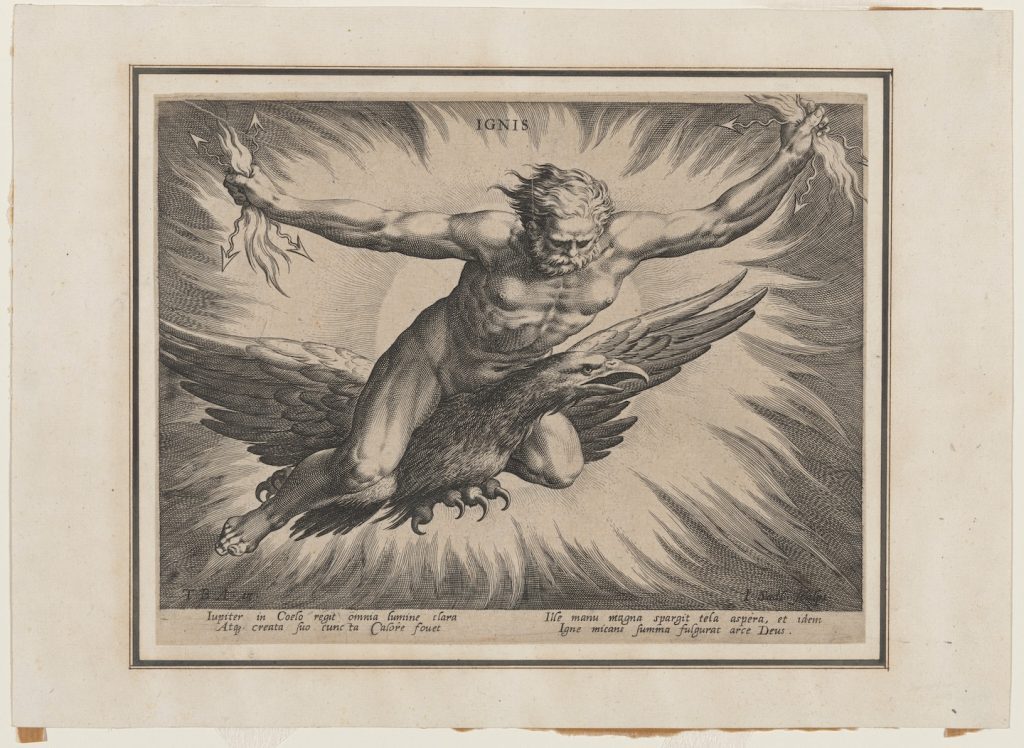
(Photo: Fire by Jan Sadeler I, 1587)
Heard much about AI these days? Of course you have. Like many of you, I’ve decided to learn more about it, especially since there’s increasing warnings about how much of an impact it will have on our world. Just do a search on “How will AI impact jobs?” to get predictions (many of which are now proving true) about the impending changes we’ll face.
A Great Resource on the Impact of AI
I’ve been following a smart woman on Substack named Amanda Claypool who writes Tomorrow Today. She’s written a series of articles on AI and has published them in an ebook entitled, Human Optional: How to Survive the Death of Knowledge Work in the Age of AI.
Check out her Substack newsletter for a number of insightful articles on AI and the economy.
Her ebook chapters include:
Part 1: Why You’re About to Lose Your Job
- The End of the Information Economy and the Workers it Employs
- The New Philosophy of Lean Business
- Market Movers are Moving the Market
- The Offshoring of Knowledge Work
- The End of Business as We Know It
Part II: Who Is Most Affected
- Entry-level Workers
- Managers
- Women
- Downstream Workers
Part III: What You Can Do
- Perform a Job Audit
- Become AI Literate
- Bolster Your Finances
- Learn a Core Skill (Or Two)
I’m recommending her (and I get no money to do so) because too many of us are giving a cursory nod to what may be the biggest change we’ll face since the discovery of fire. Whether we’re still gainfully employed, running a business or enjoying a well-deserved retirement, AI is going to change our lives in some way.
Hold On, Are the Scare Stories Really True?
There are different perspectives on how wild and crazy things may get — or not.
According to Claude.AI, the number of job losses are smaller than the predictions. Only 13.7% of US workers report having lost their job to a robot or AI-driven automation, but this has happened over many years, not just recently. (But what does he know? Remember, this is a bot reporting on it’s own viability!)
However, job losses are definitely happening. From what I’ve read, the biggest change so far has been in tech-sector entry level jobs, customer service and some administrative roles. Other sectors that will soon be impacted include entry level finance jobs, paralegal, accounting, marketing, graphic designers, copywriters and other communications related jobs.
Another perspective comes from The Financial Times newsletter, The AI Shift. They state, “…AI is displacing tasks, not jobs. The more a job consists of clearly-defined tasks, the more vulnerable it is…But most jobs involve defining and refining tasks as well as performing them, all while considering the particular context of a project or firm, and going back and forth with people who have their own perspectives and priorities. Here AI isn’t displacing people, it’s assisting them.”
Yet, after a newsworthy layoff of 8000 HR folks in 2023, IBM discovered some jobs required more than just a robot to serve internal customers. There were questions that couldn’t be answered by AI which required human interaction. Humans were needed to address ethical dilemmas using empathy, insight, critical thinking and discretion. So, IBM re-hired. However, instead of filling the same roles AI had replaced, they added back jobs into fields like software engineering, client engagement and strategy. Still a big loss for thousands of HR folks if they couldn’t or wouldn’t retrain.
No matter what job you’re in or what kind of business you run, AI should not be ignored. There are some things you can do right now to prepare for the impact.
7 Insights and Call to Action
While AI is a tool that, in some cases, will assist rather than replace warm bodies, many organizations are still taking a “wait and see” perspective. But there are other job sectors that are reacting quickly, as Amanda writes about. Professional, white-collar office workers should sit up and pay attention now, rather than wait for the day they’re asked to pack up the cardboard box. It’s a good time to learn how to use AI and take a hard look at how irreplaceable they are, really. Maybe it’s time they consider a career change or starting a small business to serve a viable market.
Customers will continue to crave authenticity. My motto has always been, “It’s never JUST business, it’s ALWAYS personal!” and that will become increasingly more important as people realize more of their interactions are with AI generated systems. Because of this, customer service training, hiring for emotional intelligence and a focus on interpersonal skills will be even more important.
Small businesses will have an advantage. Their ability to react quickly, their local presence, personal touch and genuine relationships will matter more than ever. Recommendations have always been powerful for all concerned. If you haven’t already formalized such informal arrangements, break out your contacts list and consider possible collaborations.
Let customers know when they’re dealing with a human and when they’re not. Transparency is always the better way to build trust. Whenever possible, assure them there is human oversight involved. (And yes, I used AI to research some, but not all, of this article.)
If you haven’t already done so, sign up for an AI model account, such as OpenAI (ChatGPT), Google (Gemini), Anthropic (Claude), or xAI (Grok). Then come up with a problem you’re facing and start a “conversation” with the AI agent. Provide as many specifics as you deem fit, then ask for possible solutions. The more detailed you are, the more useful the response will be. Just like with any search effort, the “long tail” keyword phrase will get you a more targeted result.
Choose tasks AI can manage for you. Yes, you will need to “train” it by providing enough information on which the system can run, so it will take some time before it can operate at maximum efficiency. But experiment with something basic, then increase the complexity over time.
Encourage your frontline leaders, staff or members to self-educate. Search out online courses, newsletters and reports that offer training. Science News Today ran an article of the 10 Best Online Courses to Learn AI (Free and Paid), which is worth your attention.